If you build it they will Come


The title of this article is a slightly modified version of the original line spoken by Kevin Costner in the 1989 movie Field of Dreams, “If you build it, he will come”. The “he” refers to Chicago White Sox player Shoeless Joe Jackson, a legendary baseball figure in 1919. The ghost of “Shoeless” Joe Jackson (played by Ray Liotta) was the first player to emerge from the cornfield onto the baseball diamond. His nickname Shoeless came in 1908 while playing for the Greenville Spinners. His new baseball cleats gave him painful blisters so he took them off and played in his socks, hence the nickname shoeless. Unfortunately, Shoeless was associated with the Black Sox Scandal in which eight members of the 1919 Chicago White Sox participated in a conspiracy to fix the World Series. As a result, Commissioner Kenesaw Landis permanently banned Shoeless and the other seven players involved from professional baseball after the 1920 season. While I’ve never seen the Field Of Dreams movie, I can only surmise that it was about giving the deceased Shoeless Joe and others that emerged from the cornfield another chance at their favorite sport.
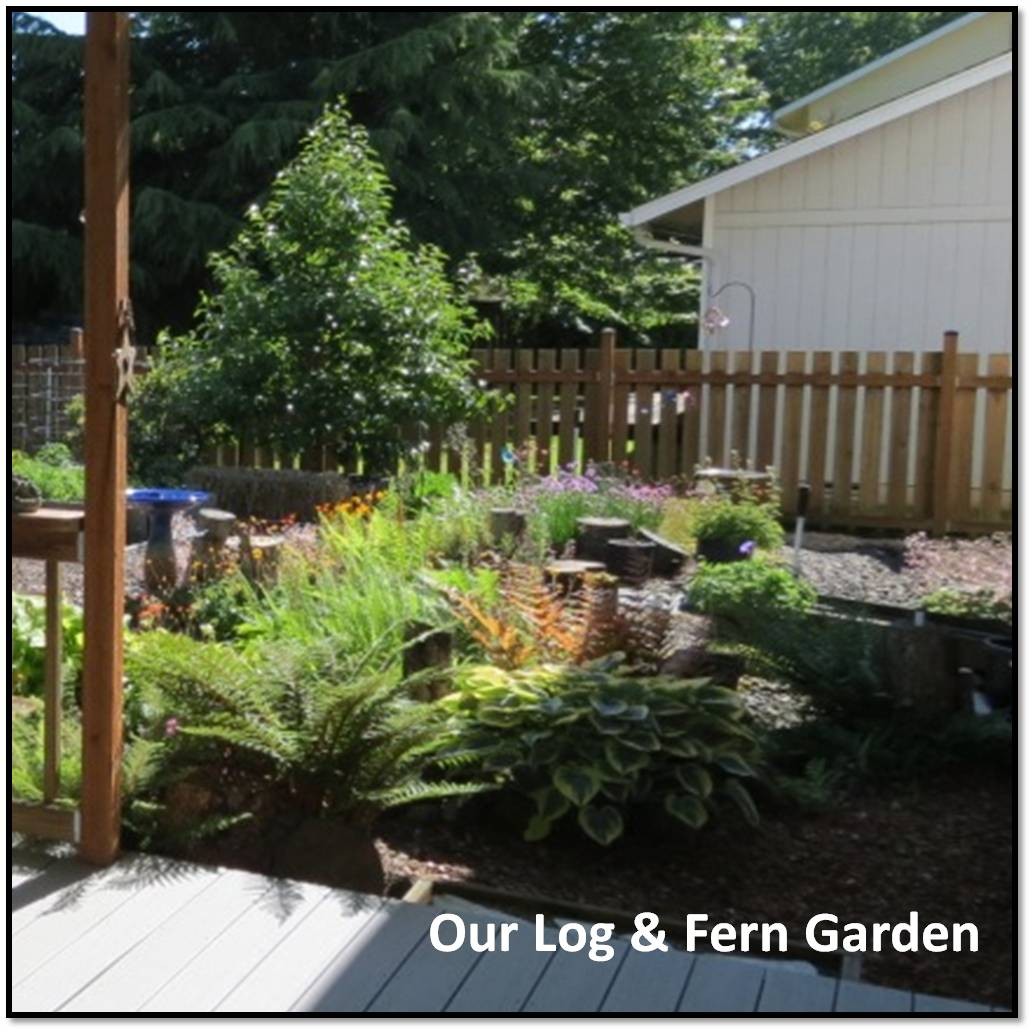
My version of “If you build it, they will come” has absolutely nothing to do with Shoeless Joe or baseball. Truth be told, neither Sandy nor I are fans of baseball or of watching most sports for that matter. Our favorite pursuits focus more on outdoor activities like gardening, hiking, mushrooming and basically engaging with the natural environment. There are countless studies regarding the physical, mental, and social benefits of interacting with nature. For some people with overly busy lifestyles, getting out to the forest to experience nature isn’t always possible. The good news and the focus of this article is that if you can’t get to nature, bring nature to you. We have found that if you build a landscape that is favorable to a host of amazing organisms, they will come. In an attempt to mimic the natural world, we’ve created areas with ferns, ground cover plants, lots of logs and small stumps. To create such an area, we needed to attend to the existing landscape that came with the house we purchased in 2008.
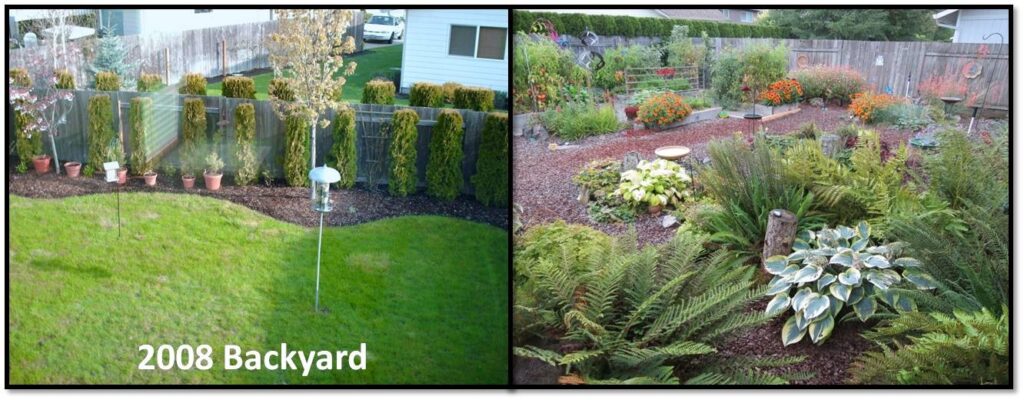
First, I must give fair warning to readers who are diehard lawn enthusiasts as what Sandy and I did to our complete yard could trigger intense emotional distress. Our first action was to eliminate all existing lawn/grass and replace it with flower gardens, raised garden beds, fruit trees, berry bushes, and natural areas. We have been using our many trips to the forest as a living guidebook for arranging our natural areas with the hope that mushrooms, lichens, and mosses would grace our garden.
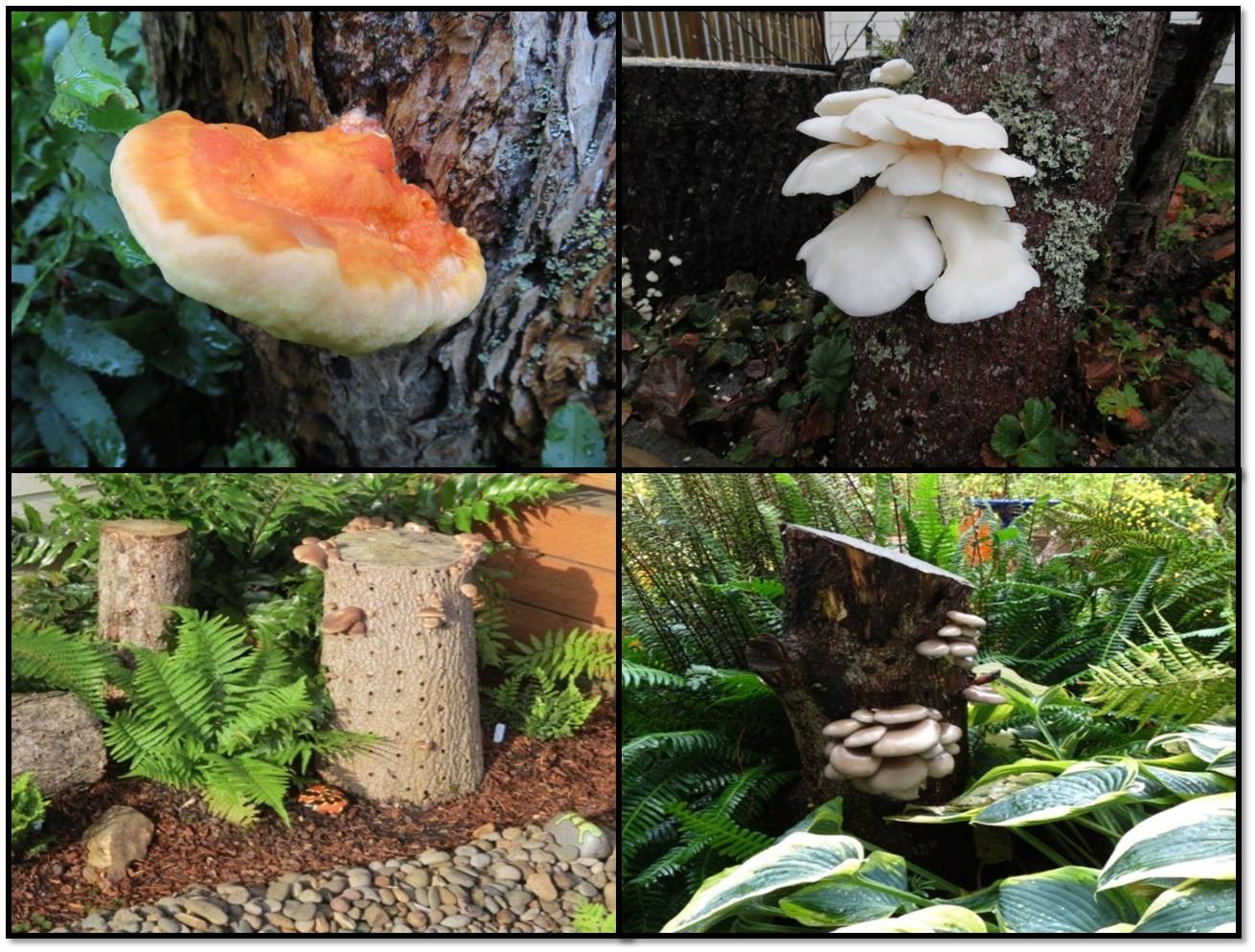
The wood types we used were from both conifer (softwood) and broadleaf (hardwood) trees. Most of the wood pieces were freshly cut from trees taken down during the winter in our neighborhood. Tree services were more than happy to have us lighten their load by hauling off some of the wood chunks they piled up. Before placing the wood in our yard, we inoculated most of the pieces with mushroom spawn plugs. We selected various oyster and shiitake varieties that are best suited for the Pacific Northwest.
In addition, we also inoculated one Douglas Fir log (upper left in above image) with Chicken of the Woods (Laetiporus conifericola). That log took more than 5-years to fruit. While we were hoping for quicker results, we’ve learned that fungi have a far different concept of time than we do.
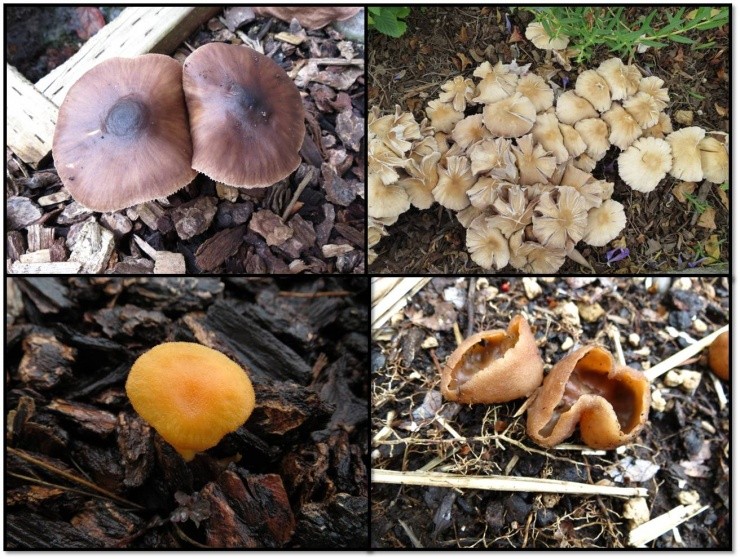
While seeing and eating mushrooms from our cultivated logs was great, it was the appearance of unexpected life forms that was really special. Where there once existed a highly domesticated series of useless lawns (just an opinion), various species of wild fungi were finding a home. Our conifer and hardwood chips that cover all our walking and open areas were now home to an abundance of various fungi. We also have unexpected but much welcomed mushrooms in our raised garden beds. Our fall raised garden bed covering of leaves, chopped bedding straw, oak sawdust and spent mushroom blocks creates a virtual fungal buffet.
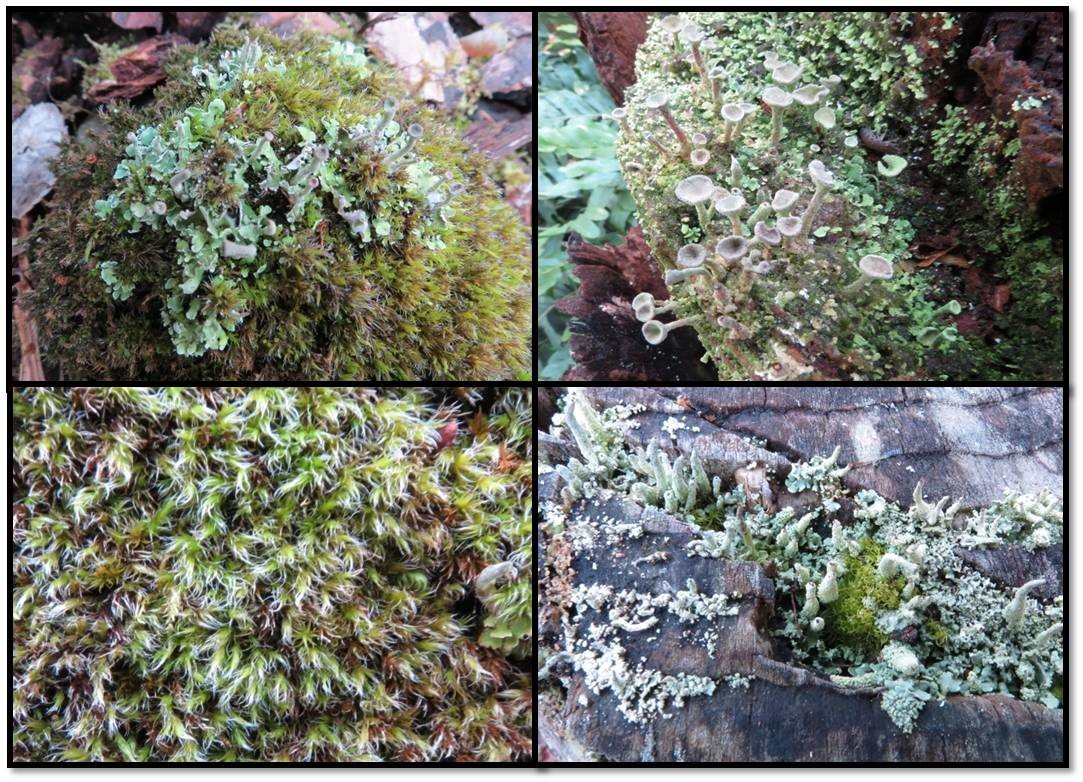
And, as our logs and stumps have aged, lichens, mosses, and other woodland organisms began to appear. It is astounding just how much diversity a backyard woodland landscape can amass. We even have a few patches of Rattlesnake plantain (Goodyera oblongifolia) as well as Henderson’s fawn-lily (Erythronium hendersonii). When building our natural areas, we would bring back duff from the woods with the hope that interesting organisms would come along with it. It has been an amazing experience and we are truly grateful to all the species of organisms that now call our garden home.
If you’re interested in creating a suitable habitat to attract some of Oregon’s natural wonders, it really isn’t that difficult. Most yards have shady areas in and around trees for shade loving plants and other species of life. In our case, our north facing backyard is shaded by our 2-story house most of the year. The rewards are endless. If you build it, they will come. You might even get a visit from “Shoeless” Joe Jackson. Although, you may need to plant some corn and maybe leave an old baseball bat lying around.
Take care and don’t forget to appreciate all the great things going on in our natural world.
Ron
PS-> Then and now. Note that unlike the grass, we carefully removed all of the plants and trees and donated them for reuse. This is how our backyard looked in 2008 when we purchased the house and this is how it looks after we made a few changes. And, it’s still evolving…